 Corporate Sales Training Programs in India

India’s business environment is becoming increasingly competitive. Customers are better informed, buying journeys are more complex, competition is intense, and sales professionals are expected to do much more than simply explain products and close deals.
Modern sales teams need to understand customer requirements, communicate value effectively, handle objections, negotiate confidently, manage relationships, use data intelligently, and create an excellent customer experience throughout the sales cycle.
This is where Corporate Sales Training plays an important role.
A well-designed corporate sales training program helps organizations develop sales professionals who can move beyond transactional selling and become trusted advisors to their customers. Whether an organization operates in B2B, retail, manufacturing, technology, financial services, healthcare, or another sector, structured sales training can help improve the capabilities and consistency of its sales teams.
In this article, we explore the importance of Corporate Sales Training Programs in India, the skills organizations should focus on, and how businesses can design effective training interventions for their employees.
What is Corporate Sales Training?
Corporate Sales Training is a structured learning and development program designed to improve the knowledge, behaviours, techniques, and practical skills required by employees involved in sales and customer-facing roles.
Unlike generic sales courses, corporate programs should ideally be customized according to an organization’s:
- Products and services
- Industry and competitive environment
- Customer segments
- Sales cycle
- Existing sales processes
- Employee experience levels
- Business objectives
- Customer challenges
For example, a salesperson working in a retail environment requires a different skill set from someone managing enterprise accounts in a B2B organization.
Similarly, an experienced regional sales manager may require Sales Leadership Training, while a newly recruited salesperson may benefit more from foundational Sales Skills Training.
Therefore, effective corporate training begins with understanding the business context rather than simply delivering a standard sales curriculum.
Why is Corporate Sales Training Important in India?
The Indian marketplace has changed considerably over the past decade.
Customers can research products, compare competitors, check reviews, evaluate pricing, and understand alternatives before speaking to a salesperson. In B2B environments, multiple stakeholders may participate in the purchasing decision, making the sales process even more complex.
As a result, traditional product-focused selling is becoming less effective.
Organizations increasingly need sales professionals who can:
- Understand customer problems
- Ask relevant questions
- Identify business needs
- Communicate value rather than features
- Handle objections professionally
- Negotiate without unnecessarily compromising margins
- Build long-term customer relationships
- Manage key accounts strategically
- Deliver superior customer experiences
This makes Sales Training for Employees an important component of organizational capability building.
The objective should not merely be to teach employees a few sales techniques. The goal should be to develop behaviours that employees can consistently apply during actual customer interactions.
Key Components of an Effective Corporate Sales Training Program
A comprehensive Corporate Sales Training program can include several modules depending on the organization’s requirements.
-
Sales Skills Training
Strong fundamentals remain essential regardless of industry.
Sales Skills Training can help participants develop capabilities across the complete sales cycle, including:
- Prospecting and lead qualification
- Understanding customer requirements
- Asking effective questions
- Building rapport
- Presenting solutions
- Communicating value propositions
- Handling objections
- Closing conversations effectively
- Following up with prospects
- Maintaining customer relationships
For organizations with employees at different experience levels, conducting a pre-training assessment can help identify skill gaps and customize the program accordingly.
The objective is not to make every salesperson follow exactly the same script. Instead, training should provide a structured framework that employees can adapt to different customer situations.
-
B2B Sales Training
Selling to another business is fundamentally different from many consumer sales situations.
A typical B2B transaction may involve multiple stakeholders, longer decision cycles, technical evaluations, procurement teams, commercial negotiations, and internal approvals.
Effective B2B Sales Training therefore needs to go beyond conventional selling techniques.
Participants should learn how to:
- Identify decision-makers and influencers
- Understand organizational buying behaviour
- Map stakeholder requirements
- Conduct effective discovery conversations
- Identify business pain points
- Build a strong business case
- Communicate measurable value
- Navigate complex sales cycles
- Handle procurement discussions
- Manage long-term business relationships
B2B sales professionals should increasingly think like business consultants rather than product representatives.
-
Consultative Selling Training
One of the most important shifts in modern selling is the transition from product-centric selling to consultative selling.
Traditional selling often begins with:
“Here is what our product does.”
Consultative selling begins with:
“What problem are you trying to solve?”
This difference fundamentally changes the customer conversation.
Consultative Selling Training teaches sales professionals to understand the customer’s situation before recommending a solution.
Participants learn techniques related to:
- Effective questioning
- Active listening
- Identifying explicit and implicit needs
- Understanding business challenges
- Diagnosing customer problems
- Connecting solutions with customer priorities
- Value-based conversations
- Building credibility and trust
This approach is particularly effective for organizations selling complex products, professional services, technology solutions, financial products, or high-value B2B offerings.
-
Negotiation Skills Training
Negotiation is one of the most commercially important capabilities for a sales professional.
Customers may ask for lower prices, additional services, extended credit periods, customized terms, faster delivery, or other concessions.
Without structured Negotiation Skills Training, salespeople may respond by immediately reducing prices simply to close the transaction.
Effective negotiation training helps employees understand:
- Negotiation preparation
- Customer priorities
- Value versus price
- Positioning and anchoring
- Handling price objections
- Managing concessions
- Creating trade-offs
- Identifying win-win opportunities
- Protecting margins
- Knowing when to walk away
- Closing negotiations professionally
The objective is not to “win” every negotiation. It is to create commercially sustainable agreements while maintaining positive customer relationships.
-
Key Account Management Training
For many organizations, a relatively small number of customers contribute a significant percentage of revenue.
These customers require a more strategic approach.
Key Account Management Training helps sales professionals move from simply servicing important customers to systematically developing those accounts.
Training can include:
- Account segmentation
- Stakeholder mapping
- Understanding customer organizations
- Identifying growth opportunities
- Account planning
- Relationship mapping
- Cross-selling and upselling
- Customer retention
- Opportunity management
- Strategic account reviews
A good key account manager should understand not only what the customer currently purchases but also where the customer’s business is heading and how the organization can create additional value.
-
Relationship Management Training
Sales does not end when the purchase order is received.
Long-term business growth often depends on retention, repeat business, referrals, and expansion within existing accounts.
Relationship Management Training helps customer-facing employees build professional relationships based on credibility, communication, reliability, and value.
Participants can learn how to:
- Build customer trust
- Maintain regular communication
- Manage expectations
- Handle difficult conversations
- Resolve misunderstandings
- Follow up effectively
- Strengthen long-term relationships
- Identify future opportunities
This is especially important in industries where repeat business and long-term contracts contribute substantially to revenue.
-
Customer Service Training
Sales and customer service are closely connected.
An excellent sales interaction followed by poor customer service can quickly damage customer confidence.
Customer Service Training helps employees understand how their interactions influence customer satisfaction and loyalty.
Important areas include:
- Professional communication
- Understanding customer expectations
- Active listening
- Complaint handling
- Service recovery
- Problem solving
- Managing difficult customers
- Telephone and email etiquette
- Creating positive customer interactions
Organizations should view customer service not simply as a support function but as an important part of the overall customer relationship.
-
Customer Experience Training
Customer service typically focuses on individual interactions. Customer Experience Training, however, takes a broader view of the complete customer journey.
Employees learn to examine interactions from the customer’s perspective.
This may include:
Awareness → Enquiry → Sales Conversation → Purchase → Onboarding → Service → Support → Renewal → Advocacy
Every stage can influence how customers perceive an organization.
Customer Experience Training can help teams understand:
- Customer journey mapping
- Customer expectations
- Moments that matter
- Communication consistency
- Customer feedback
- Service quality
- Experience gaps
- Customer loyalty
Organizations that create consistently positive experiences can differentiate themselves even in highly competitive markets.
-
Retail Sales Training
Retail environments require a specific set of selling skills.
Customers may make decisions quickly, compare alternatives immediately, and expect knowledgeable assistance without feeling pressured.
Retail Sales Training can focus on:
- Customer greeting and engagement
- Identifying customer requirements
- Product knowledge
- Demonstrating value
- Recommendation techniques
- Cross-selling
- Upselling
- Handling objections
- Closing techniques
- Customer service
- Repeat business and loyalty
Role plays are particularly effective in retail training because employees can practise realistic customer scenarios in a controlled environment.
-
Sales Leadership Training
Developing individual salespeople is important, but organizations also need capable sales managers.
A strong salesperson does not automatically become a strong sales leader.
Sales Leadership Training helps managers develop the capabilities required to lead, coach, and improve sales teams.
Topics may include:
- Sales coaching
- Performance management
- Target setting
- Sales planning
- Pipeline reviews
- Forecasting
- Motivating sales teams
- Conducting effective sales meetings
- Giving constructive feedback
- Identifying skill gaps
- Managing underperformance
- Developing high-potential employees
The role of a sales manager should extend beyond monitoring targets. Effective managers actively develop the capabilities of their teams.
Moving from Product Selling to Value Selling
One of the biggest opportunities for many sales organizations is changing how their teams communicate with customers.
Consider these two approaches.
Product-focused approach:
“Our solution includes these features and functionalities.”
Value-focused approach:
“Based on the challenges you described, this solution could help reduce manual effort, improve turnaround time, and give your team better visibility into performance.”
The second conversation connects the offering with a business outcome.
Modern Corporate Sales Training should therefore help employees understand the progression:
Features → Benefits → Business Value → Customer Outcomes
This is particularly important in B2B environments where buyers increasingly expect suppliers to demonstrate measurable business value.
The Importance of Hands-On Sales Training
Sales cannot be learned effectively through presentations alone.
Participants need opportunities to practise.
An effective corporate program should incorporate activities such as:
- Role plays
- Customer simulations
- Case studies
- Objection-handling exercises
- Negotiation scenarios
- Discovery conversations
- Sales-pitch exercises
- Account-planning activities
- Group discussions
- Feedback sessions
For example, instead of simply explaining objection handling, participants can be given an actual scenario:
Customer: “Your competitor is offering the same solution at a 15% lower price.”
Participants then practise different responses and receive feedback.
This makes the training practical, engaging, and directly applicable to workplace situations.
Customized Corporate Sales Training vs Standard Training
Every organization has different sales challenges.
A manufacturing company’s B2B sales process may be completely different from a retail company’s customer interaction model.
Similarly, a technology company selling enterprise software requires different selling capabilities from a financial-services organization.
Therefore, Corporate Sales Training Programs are generally more effective when customized.
Customization can be based on:
- Industry
- Products/services
- Customer profiles
- Sales hierarchy
- Experience level
- Sales cycle
- Existing challenges
- Business objectives
- Real customer scenarios
Pre-training discussions with sales leadership, HR, and L&D teams can help trainers understand these requirements.
How Should Organizations Measure Sales Training Effectiveness?
Training success should not be measured only through participant feedback forms.
Organizations can evaluate training at multiple levels.
Participant Learning
Did employees understand the concepts and frameworks?
This can be assessed through quizzes, exercises, simulations, and role plays.
Behavioural Application
Are employees actually applying the techniques after training?
Managers can observe customer conversations, sales meetings, negotiations, and account reviews.
Business Indicators
Depending on the program objectives, organizations may monitor metrics such as:
- Conversion rates
- Average deal size
- Sales-cycle duration
- Customer retention
- Repeat business
- Cross-selling
- Upselling
- Discount levels
- Pipeline quality
- Customer satisfaction
Not every improvement can be attributed exclusively to training, but connecting learning outcomes with relevant business indicators makes training more meaningful.
Choosing the Right Corporate Sales Training Program in India
Organizations evaluating Corporate Sales Training in India should look beyond the trainer’s presentation skills.
Consider whether the program provides:
Business Relevance: Does the trainer understand real-world sales situations?
Customization: Can examples and activities be adapted to your industry?
Hands-On Learning: Will participants actually practise the skills?
Corporate Experience: Has the trainer worked with professional audiences?
Practical Frameworks: Can employees apply what they learn immediately?
Post-Training Reinforcement: Are there opportunities for assessments, assignments, coaching, or follow-up sessions?
A strong training program should ultimately help participants answer one question:
“What will I do differently in my next customer conversation?”
If employees cannot translate the learning into action, even an engaging workshop may have limited long-term impact.
Corporate Sales Training for Different Employee Levels
Organizations should also avoid providing exactly the same training to everyone.
Different roles require different capabilities.
New Sales Professionals may require Sales Skills Training covering prospecting, communication, customer conversations, objection handling, and closing.
Experienced Sales Professionals may benefit more from Consultative Selling Training, Negotiation Skills Training, Relationship Management Training, and advanced B2B selling.
Key Account Managers require Key Account Management Training focused on strategic relationships, account growth, stakeholder management, and opportunity planning.
Retail Teams require Retail Sales Training combined with Customer Service Training and Customer Experience Training.
Sales Managers and Leaders require Sales Leadership Training covering coaching, performance management, forecasting, pipeline management, and team development.
Creating role-based learning journeys can produce significantly better outcomes than adopting a one-size-fits-all approach.
The Future of Corporate Sales Training in India
Sales training itself is evolving.
Digital selling, CRM platforms, data analytics, virtual customer meetings, automation, and Artificial Intelligence are changing how sales professionals work.
Future-ready sales teams will need a combination of human capabilities and technology-enabled selling skills.
Human capabilities such as listening, empathy, negotiation, communication, relationship building, and judgment will remain critical.
At the same time, sales professionals increasingly need to understand how technology can help them:
- Research prospects
- Prepare for customer meetings
- Analyze customer information
- Personalize communication
- Draft follow-ups
- Summarize meeting notes
- Identify sales opportunities
- Analyze pipelines
- Improve forecasting
- Prepare presentations and proposals
Therefore, organizations designing future Corporate Sales Training programs should consider combining traditional selling capabilities with digital and AI-enabled sales productivity.
Conclusion
Effective selling today requires much more than product knowledge and persuasive communication.
Sales professionals need to understand customers, diagnose requirements, communicate business value, negotiate effectively, manage strategic relationships, and deliver strong customer experiences.
A well-designed Corporate Sales Training program can help organizations systematically build these capabilities across their sales teams.
Depending on the business requirement, the learning journey can incorporate Sales Training for Employees, Sales Skills Training, B2B Sales Training, Consultative Selling Training, Negotiation Skills Training, Key Account Management Training, Customer Service Training, Customer Experience Training, Relationship Management Training, Retail Sales Training, and Sales Leadership Training.
However, the effectiveness of any training program ultimately depends on its relevance to real business situations.
Organizations should therefore move beyond generic classroom training and focus on customized, practical, scenario-based and outcome-oriented sales development programs.
When sales training reflects the actual conversations employees have with customers every day, learning becomes easier to apply and far more valuable to the organization.
Looking for Corporate Sales Training in India?
Analytics Training Hub (ATH) offers customized corporate training programs designed around the specific learning needs, participant profiles, and business objectives of organizations.
Programs can be customized across areas such as Sales Skills, B2B Sales, Consultative Selling, Negotiation Skills, Key Account Management, Customer Service, Customer Experience, Relationship Management, Retail Sales, and Sales Leadership.
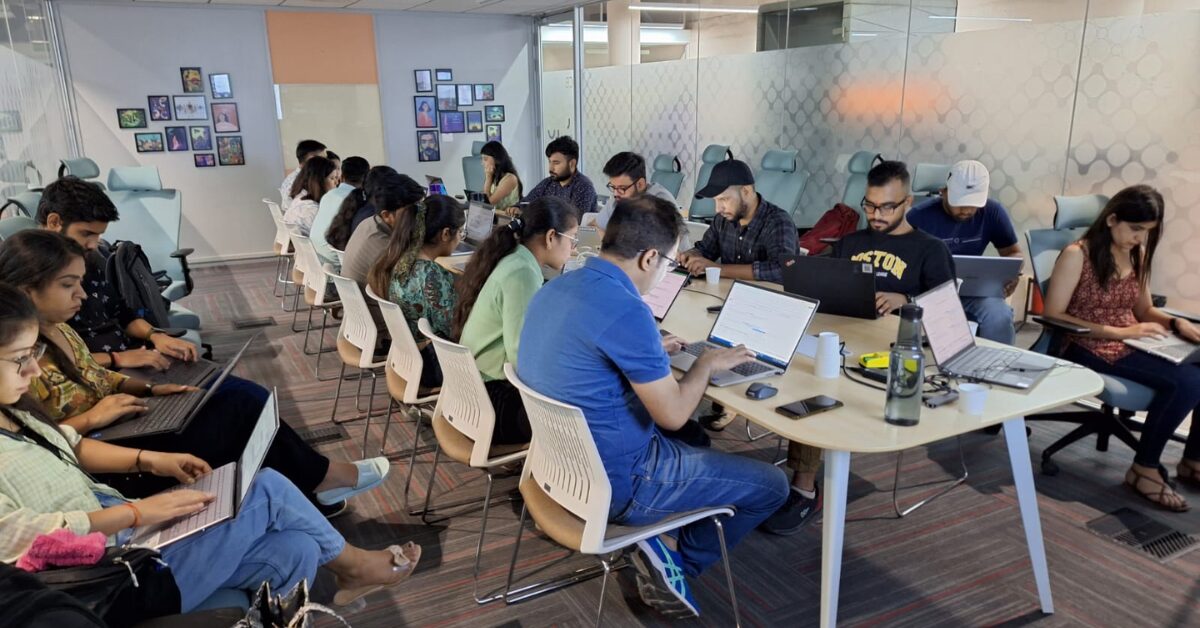
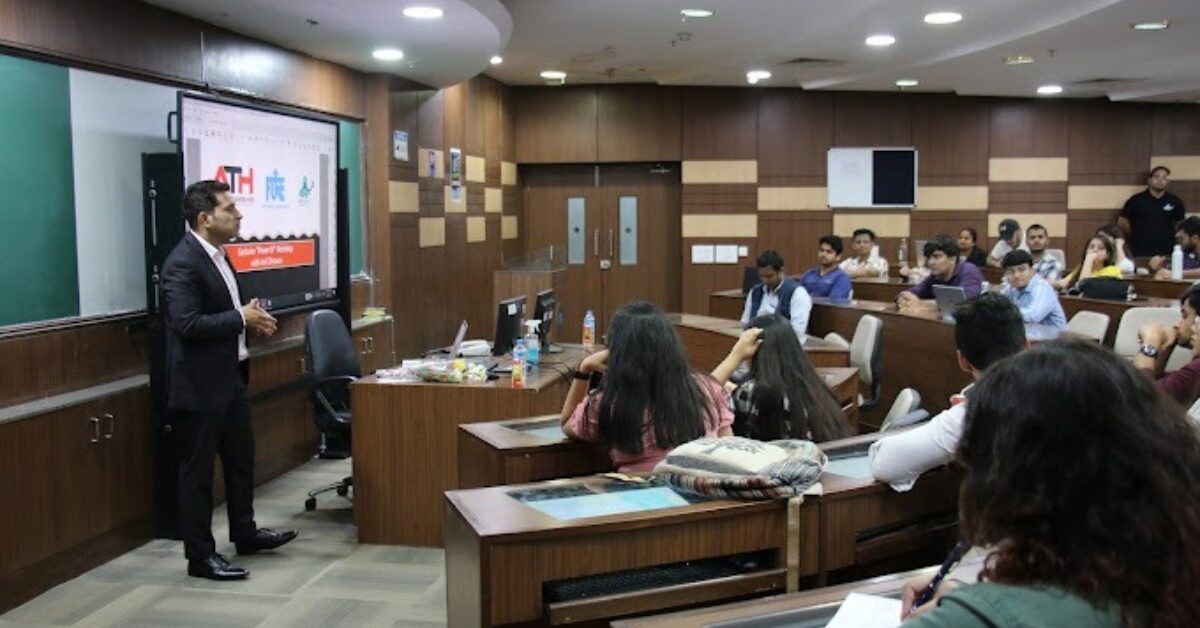
Training can be delivered through instructor-led classroom, onsite, and virtual formats, with a strong emphasis on practical exercises, business scenarios, role plays, and workplace application.
Connect with Analytics Training Hub to discuss a customized Corporate Sales Training program for your team.
Frequently Asked Questions
-
What is Corporate Sales Training?
Corporate Sales Training is a structured training program designed to improve the sales knowledge, communication skills, negotiation abilities, and customer relationship capabilities of employees working in sales and business development roles.
-
Why is Corporate Sales Training important for companies?
Corporate sales training helps organizations improve sales performance, increase conversion rates, strengthen customer relationships, and equip employees with practical selling techniques that align with business goals.
-
Who should attend a Corporate Sales Training program?
Sales executives, business development professionals, account managers, customer-facing teams, retail sales staff, sales managers, and team leaders can all benefit from Sales Training for Employees.
-
What topics are covered in a Corporate Sales Training program?
A typical program includes sales fundamentals, consultative selling, objection handling, negotiation, customer relationship management, B2B selling, key account management, sales leadership, and customer experience.
-
Is Corporate Sales Training suitable for freshers?
Yes. Beginner-level Sales Skills Training helps fresh graduates and new sales employees develop confidence, communication skills, and a structured sales approach.
-
What is the difference between Sales Skills Training and B2B Sales Training?
Sales Skills Training focuses on core selling techniques applicable across industries, while B2B Sales Training focuses on selling to businesses, managing multiple stakeholders, longer sales cycles, and value-based selling.
-
What is Consultative Selling Training?
Consultative Selling Training teaches sales professionals how to understand customer needs, ask effective questions, identify pain points, and recommend solutions instead of simply promoting products.
-
How does Negotiation Skills Training help sales professionals?
Negotiation Skills Training helps employees negotiate pricing, terms, and commercial discussions confidently while protecting profitability and building long-term customer relationships.
-
What is Key Account Management Training?
Key Account Management Training teaches employees how to manage strategic customers, identify growth opportunities, build long-term partnerships, and increase customer retention.
-
Why is Relationship Management Training important?
Relationship Management Training helps sales professionals build trust, improve customer communication, strengthen client relationships, and increase repeat business opportunities.
-
What is Customer Experience Training?
Customer Experience Training focuses on improving every stage of the customer journey, from enquiry to after-sales support, to create positive and consistent customer experiences.
-
What is Customer Service Training?
Customer Service Training develops communication, complaint handling, listening skills, service recovery techniques, and customer interaction best practices for customer-facing employees.
-
What is Retail Sales Training?
Retail Sales Training is designed for retail sales teams and focuses on customer engagement, product recommendations, upselling, cross-selling, objection handling, and closing sales in retail environments.
-
What is Sales Leadership Training?
Sales Leadership Training helps sales managers improve coaching, performance management, forecasting, pipeline reviews, team motivation, and sales planning capabilities.
-
How long does a Corporate Sales Training program usually take?
Corporate Sales Training programs can range from one-day workshops to multi-day customized learning journeys, depending on the organization’s objectives and participant profile.
-
Can Corporate Sales Training be customized for our industry?
Yes. Effective Corporate Sales Training programs are customized for industries such as manufacturing, IT, BFSI, retail, healthcare, FMCG, pharmaceuticals, logistics, and professional services.
-
Is online Corporate Sales Training effective?
Yes. Instructor-led online Sales Training for Employees can be highly effective when combined with interactive discussions, role plays, breakout activities, case studies, and assignments.
-
How is Corporate Sales Training different from public sales workshops?
Corporate Sales Training is customized for a company’s products, customers, sales process, and business challenges, whereas public workshops usually follow a generic curriculum.
-
Do participants receive practical exercises during training?
Yes. Most Sales Skills Training programs include role plays, customer scenarios, objection handling exercises, negotiation simulations, and business case studies.
-
How can organizations measure the effectiveness of Corporate Sales Training?
Organizations can measure improvements through assessments, manager observations, customer feedback, conversion rates, pipeline quality, customer retention, and sales performance metrics.
-
Which industries benefit the most from Corporate Sales Training?
Industries including IT, SaaS, manufacturing, automotive, retail, healthcare, BFSI, telecom, education, logistics, and consumer goods regularly invest in Corporate Sales Training.
-
What are the benefits of B2B Sales Training for organizations?
B2B Sales Training helps teams improve stakeholder management, value-based selling, account planning, sales conversations, proposal presentations, and long sales-cycle management.
-
Can Corporate Sales Training improve customer retention?
Yes. By combining Relationship Management Training, Customer Service Training, and Customer Experience Training, organizations can strengthen customer loyalty and increase repeat business.
-
Should sales managers attend a separate training program?
Yes. Sales managers benefit from dedicated Sales Leadership Training focused on coaching teams, reviewing pipelines, forecasting sales, conducting performance conversations, and developing future leaders.
-
How do we choose the right Corporate Sales Training provider in India?
Look for a training partner with corporate training experience, industry-specific customization, practical teaching methodology, experienced trainers, hands-on activities, post-training support, and proven success with corporate clients across industries.
About the Author: Nisha Kanojiya